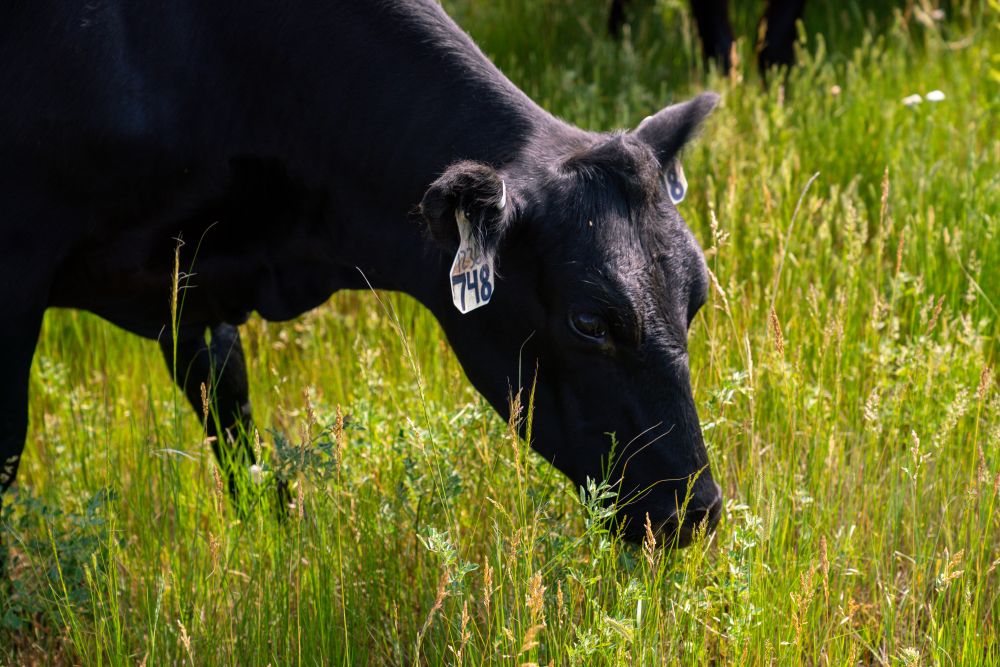

Sorghum and related fodder crops (sudan grass, sorghum-sudan hybrids) are popular drought feed — but drought stress is exactly what makes them dangerous. Stressed plants can accumulate two different toxins: cyanide (from cyanogenic glycosides) and nitrate. Both can kill livestock, and both are more likely to build up under the same conditions: drought, frost, wilting, and damaged regrowth.
Two different poisons, similar symptoms
- Cyanide: released when plant cyanogenic glycosides break down (either from tissue damage or in the animal's rumen), it blocks cells from using oxygen. Onset can be extremely fast — animals can die within minutes of a lethal dose.
- Nitrate: converted to nitrite by rumen bacteria, which then stops blood from carrying oxygen. Onset is generally slower than cyanide poisoning.
Both produce similar signs — labored breathing, weakness, staggering, collapse — which is part of why lab testing rather than guesswork is important for a definitive diagnosis.
Does testing for nitrate tell you about cyanide risk?
Not directly. Nitrate and cyanide are produced by unrelated plant pathways, and their levels don't reliably track each other. What they do share is the trigger: the same drought/frost/wilting stress that pushes nitrate up in the stems is also the kind of stress that produces high-cyanide regrowth. So a high nitrate reading is a reasonable signal that a field has been under stress worth worrying about — but it isn't a substitute for testing cyanide directly if that's the risk you're trying to rule out.
For nitrate specifically, on-site test kits are an option if you'd rather check before sending anything to a lab: NECi makes a Dry Forage Nitrate Test Kit for hay, corn stalks, and other dried material, and a Green Forage Nitrate Test Kit for green chop, standing crop, and silage where you can squeeze out plant sap.
Sources for the details
Rather than restate everything here, the original sources below go into the specific thresholds, grazing guidelines, and testing procedures — worth reading directly since recommendations can vary by region, sorghum variety, and animal history:
- Cyanide and nitrate poisoning from sorghum crops — Business Queensland (overview, with linked pages on cyanide, nitrate, testing, and using sorghum as fodder)
- Sorghum — Agriculture Victoria (archived) — grazing height guidance, sulphur supplementation, and introduction protocols
- Krasuska et al., "Hormetic action of cyanide: plant gasotransmitter and poison", Phytochemistry Reviews (2024) — plant-level biochemistry of cyanide production and detoxification
- Jones, "Why Are So Many Food Plants Cyanogenic?", Phytochemistry (1998) — background on cyanogenic glycosides across food and forage crops
If you suspect an animal has been poisoned, the consistent advice across these sources is the same: get stock off the suspect feed immediately and call a veterinarian for diagnosis and treatment — this isn't something to work out from a blog post.